News
Why the farm always comes first for the (rural) housewives of Cheshire
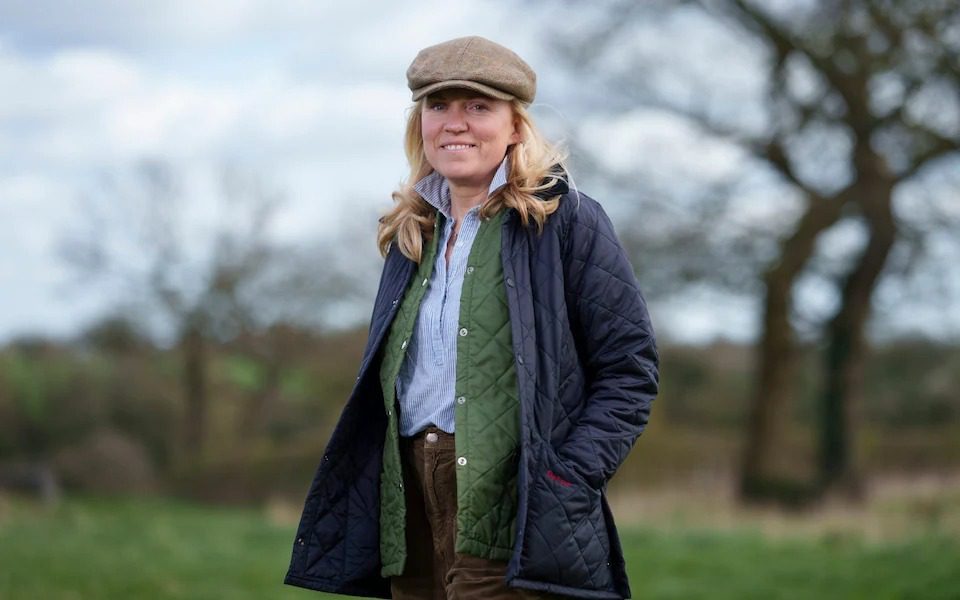
When I call Catherine Rayner, the proprietor of Hill House Farm, she is dropping her horsebox off at the garage; the rest of the day will involve tending to her competition ponies, cleaning her holiday-rental cottages, baking homemade lemon drizzle cake and handling invoicing.
While up the road her ultra-coiffed neighbours are set to star on the latest series of The Real Housewives of Cheshire, Rayner has “never, ever had my nails done”; she doesn’t sip champagne at Cheshire Polo Club – her husband and son level out its pitches in their tractors. The reality show features, as ITV puts it, “a world of designer bags, flawless glam and the unmistakable sound of popping champagne corks”, and the line-up includes the fiancée of a billionaire football club owner and a woman who proudly spends £50,000 per week on a holiday. But it is the ladies in Rayner’s line of work who are the real lifeblood of the area, she says. Call them the Rural Housewives of Cheshire.
The 16 women of the Cheshire Farm Stay Group gather every couple of months to share tales from the rural frontlines, a tradition that has been going since 1985. Things have never been tougher: a third of farmers made no profit in 2025, while 51 per cent have considered leaving the industry due to the financial strain. And so the Rural Housewives have had to diversify, turning generations-old beef farms into homestays, cultivating pick-your-own dahlia patches, and, in perhaps the only crossover with their reality-TV peers, trying to break into social media.
Tradwives and ‘bloody hard’ work
That latter task is headed up by Rachel Whittingham, 51, who swapped corporate life for Yew Tree Farm, where her husband grew up, 13 years ago. Rayner remembers a social media training session in Whittingham’s kitchen as “hysterical”, especially as Dilys, their oldest member at 82, “doesn’t even have an iPhone”.
Online, Whittingham is able to dispel misconceptions about farmers’ wives. “[People] think we just all swan round in Land Rovers and wellies, and maybe feed a few animals, and actually, it’s a bit harder than that.” Mastering these platforms is especially important now, given the cachet the pastoral life holds on the likes of Instagram and TikTok. More than 20 million people lust after Utah “tradwife” Hannah Neeleman, known as “Ballerina Farm”. Where the young once aspired to city skylines, #cottagecore appears to now have the edge. (The influx of American celebrities to the Cotswolds, drawn in by bucolic snaps, has also been good for business.)
But when people tell Rayner they want a slice of the good life, and are mulling shipping out to the countryside to set up B&Bs, “my husband and I look at each other and just quietly laugh to ourselves, because they have no idea the work that goes on behind the scenes”.
Farmers’ graft is not for the faint-hearted, says Janet Maughan of Overwater Marina in south Cheshire. A motorbike dealer’s daughter and former lecturer, she admits that “I was actually stunned by how bloody hard they work... it was quite a baptism by fire”. That included when she went into labour with her first child, “and my husband said, ‘I’ll just go out and milk, and then we’ll go to hospital,’” she laughs. “The farm comes first.”
Diversifying to make ends meet
The Maughans, like the rest of the Farm Stay Group, are among the 71 per cent of farming businesses that the Department for Economic and Rural Affairs estimate have diversified to keep up with current constraints. The dairy farm has been run by the family since 1960, in 2010, the Maughans borrowed £2 million to build the inland-waterways marina, Overwater (named after the breed of their herd), and eventually had to sell the cows in order to stay afloat. They now farm a dairy herd in partnership with Maughan’s husband’s cousin, raising his livestock (which she equates to “having 650 teenagers running round the farm”), and have set up holiday lodges and railway-themed glamping on their land.
There is no normal day-to-day: Maughan, 55, has 18 staff, and “my role has changed from being front desk, booking customers in, then going home and helping Angus [her husband, a third-generation farmer] on the farm afterwards, to being the fixer, the problem solver, the strategy person that sits at the top of the business, shaping it and guiding it”. Forget pampering or hot yoga in Cheshire’s “Footballer’s Triangle” (the Real Housewives’ hub between Alderley Edge, Wilmslow and Prestbury): competing in local dressage competitions is her “mindfulness”, she says.
The opulence seen on the show, which has surpassed 100 million streams on ITV and will air its 19th season this year, brings the Rural Housewives’ reality into sharp focus. “Would I like to go out for long, boozy lunches? Well, who wouldn’t?” says Maughan. Instead, she finds herself looking at the farming community, thinking: “I have no idea why you’re working so hard for so little, for so many people who are so ungrateful”. Farmers are “out there 365 days a year, no matter what, busting a gut, and they just get criticism and they get crap prices for the product they produce, and it’s hard to keep getting up and doing it”. She can only describe what keeps them going as “an absolute burning desire... it’s a calling that they can’t ignore”.
‘You are the backbone of the family’
That calling can take its toll, says Sally-Ann Chesters of Millmoor Farm, a 17th-century dairy-farm-turned-beef-and-sheep-farm with on-site cottages (they also offer “lambing breaks”). Recent global conflicts have driven up the prices of fertiliser, electricity and oil, while milk prices have dropped. It’s no wonder “mental health issues and financial pressure [are] massive for farmers at present”, the 58-year-old says.
Chesters, a former veterinary nurse who grew up on Yew Tree Farm (where Whittingham, her sister-in-law, now lives), adds that “farmers treat exhaustion like a badge of honour and as a wife you are the backbone of the family. It’s very isolating at times, which is why our Cheshire group is so important.” They are there to lend an ear for one another’s business concerns, “but more importantly, emotionally and socially. We are strong independent women and an integral part of the farming community.”
For Harriet Davies, the group’s youngest member at 31, being a part of that community has spanned the generations. While at university, she began attending meetings with her late mother, and now brings along her own daughters, aged two and five, and her father.
Her grandparents bought Brook House, a dairy farm, in 1949; her childhood “sometimes involved being woken up in the middle of the night to go and hold the torch while the vet was performing a caesarean on a cow”.
Nighttime interruptions aside, she knows from experience that farms provide “an idyllic childhood, really. It’s beautiful sunsets over the farm, looking out over the field – it’s just perfect”. There is an undeniable bond that develops between farmer and flock (or in her case, herd), too. Having named the cows in accordance with their personalities – such as Fido, so-called for his penchant for following them around – rising costs and her father’s semi-retirement meant they had to change course, adding holiday rentals to the property, and now farming their neighbour’s cattle under a contract agreement. “When we had to sell off our own, it was like saying goodbye to part of your family,” Davies remembers. “I did have a little bit of a cry.”
She wants to teach her girls the overarching lesson that life on the farm has taught her: that “you’ve got to be ready for anything”. “Anything” includes the day last summer when she heard particularly loud mooing, and thought: “‘Oh, how lovely, the cows are nearby’. And then you think – ‘Wait a minute, that moo sounds really close.’” Opening the curtains revealed that the cows had broken a fence and escaped into her garden, and were chomping on the flowers.
Through cow break-ins and beyond, the ladies have been there, Davies says. “One of the brilliant things about being with the group is that I benefit from their experience and their knowledge.” She is seeking to return the favour with some more modern guidance of her own – even if their recent attempt to film a video of them getting out of a Land Rover should have come with a “blooper reel... I don’t think we’ve quite got them TikTok dancing yet”, she says of the Rural Housewives. “But maybe that’ll be in the works.”
The Real Housewives of Cheshire returns to ITV2 at 9pm on Tuesday, April 21.


Articles

Fetching your results
This should only take a few moments...

Post Date: 10th Sept 2026
Read More
Post Date: 25th Aug 2026
Read More
Post Date: 25th Aug 2026
Read More
Post Date: 14th Aug 2026
Read More
Post Date: 12th Aug 2026
Read More
Post Date: 12th Aug 2026
Read More
Post Date: 16th Jul 2026
Read More
Post Date: 15th Jul 2026
Read More
Post Date: 14th Jul 2026
Read More